Rooted and rising: 5 takeaways from ASU Learning Summit 2026 on learning beyond the degree
Faculty and staff from across ASU came together to connect ideas, share expertise and shape what’s next for learners
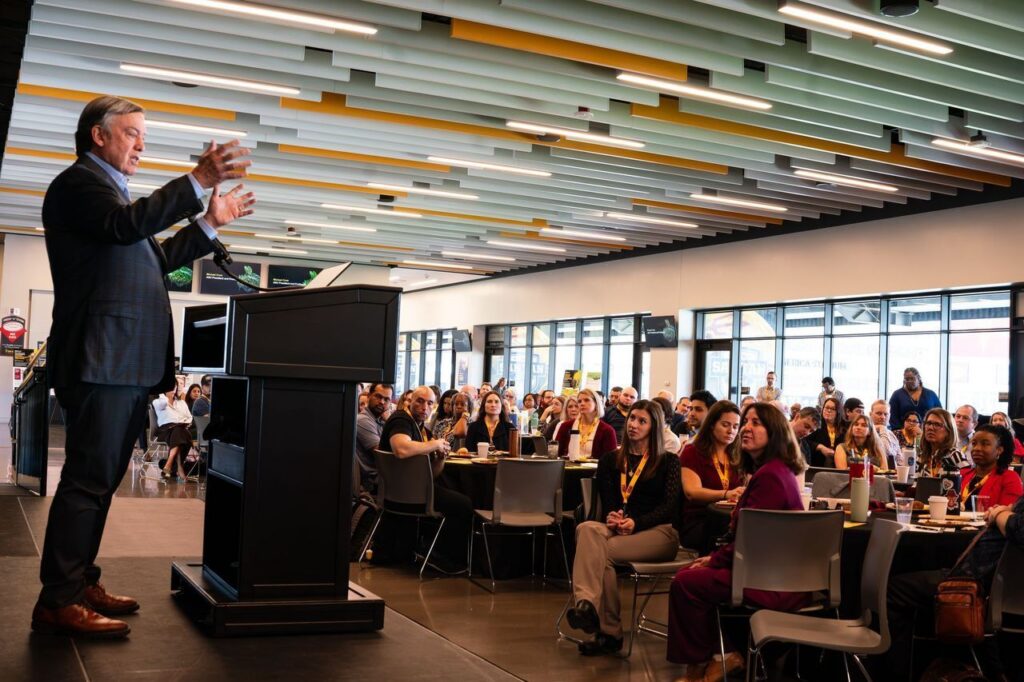
For most of history, ASU President Michael Crow told Summit attendees, the knowledge universities created reached a narrow few: the people who enrolled at 18 and graduated. “A few people find their way past that,” he said. “But far from enough.”
ASU Learning Enterprise is working to change that.
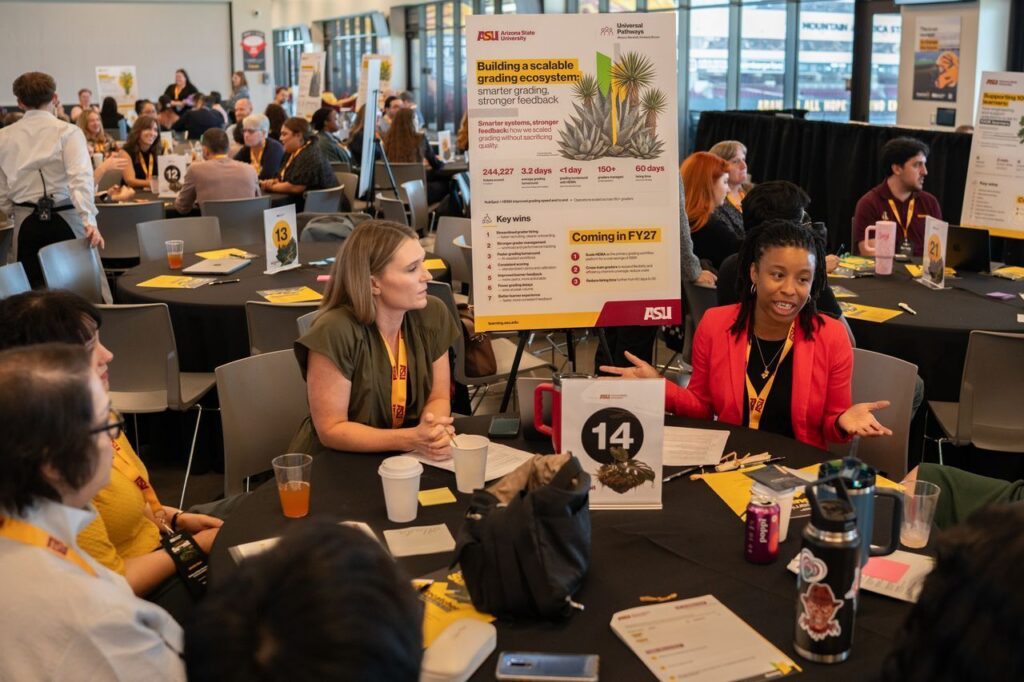
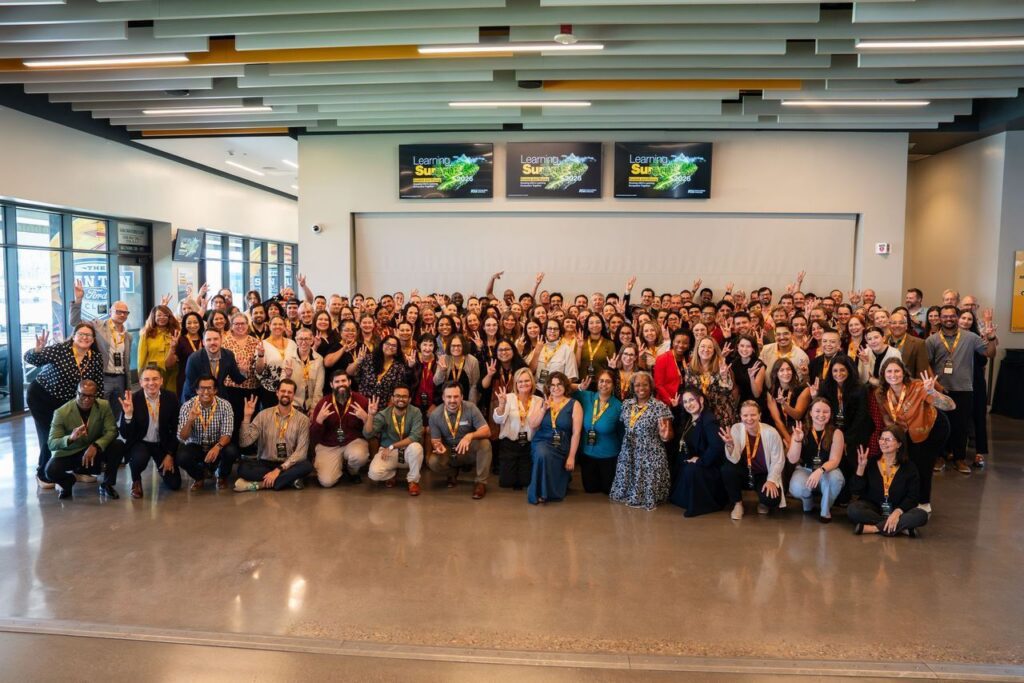
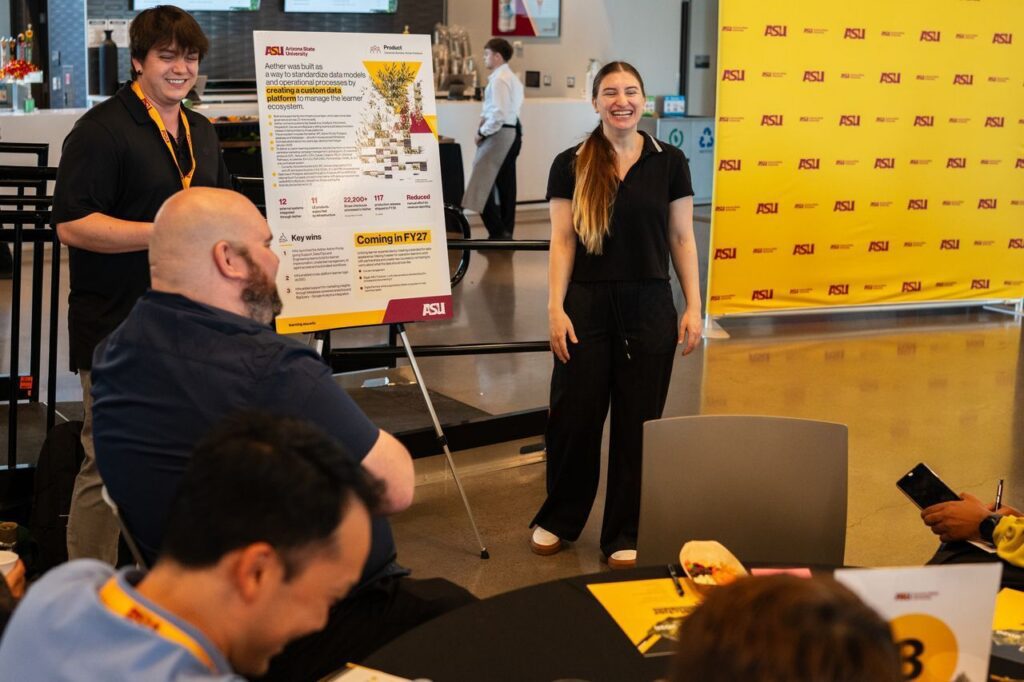
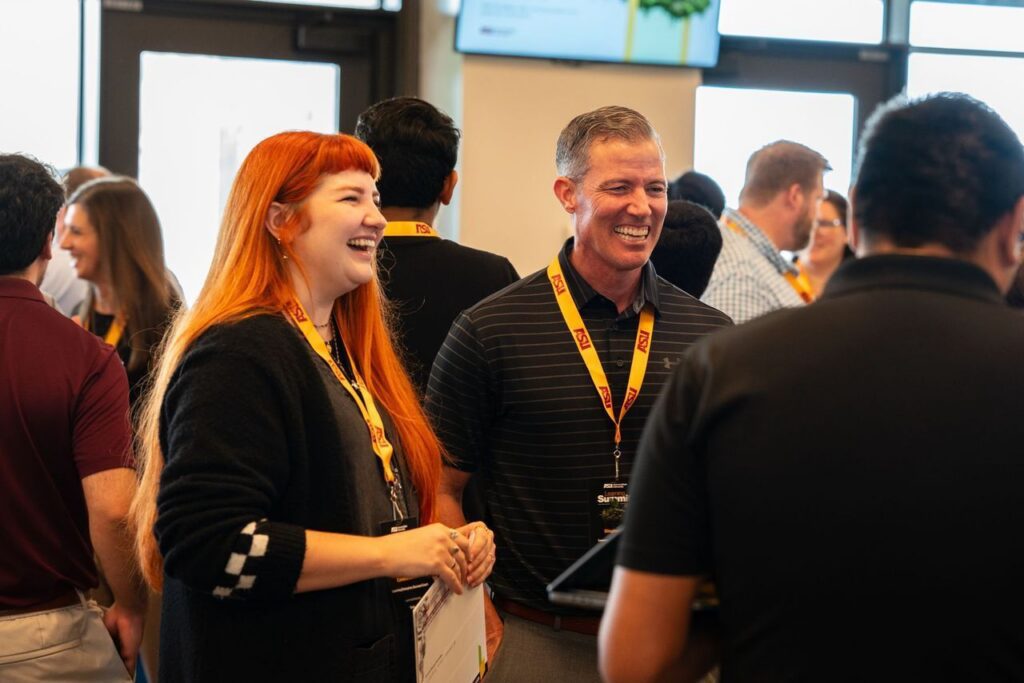
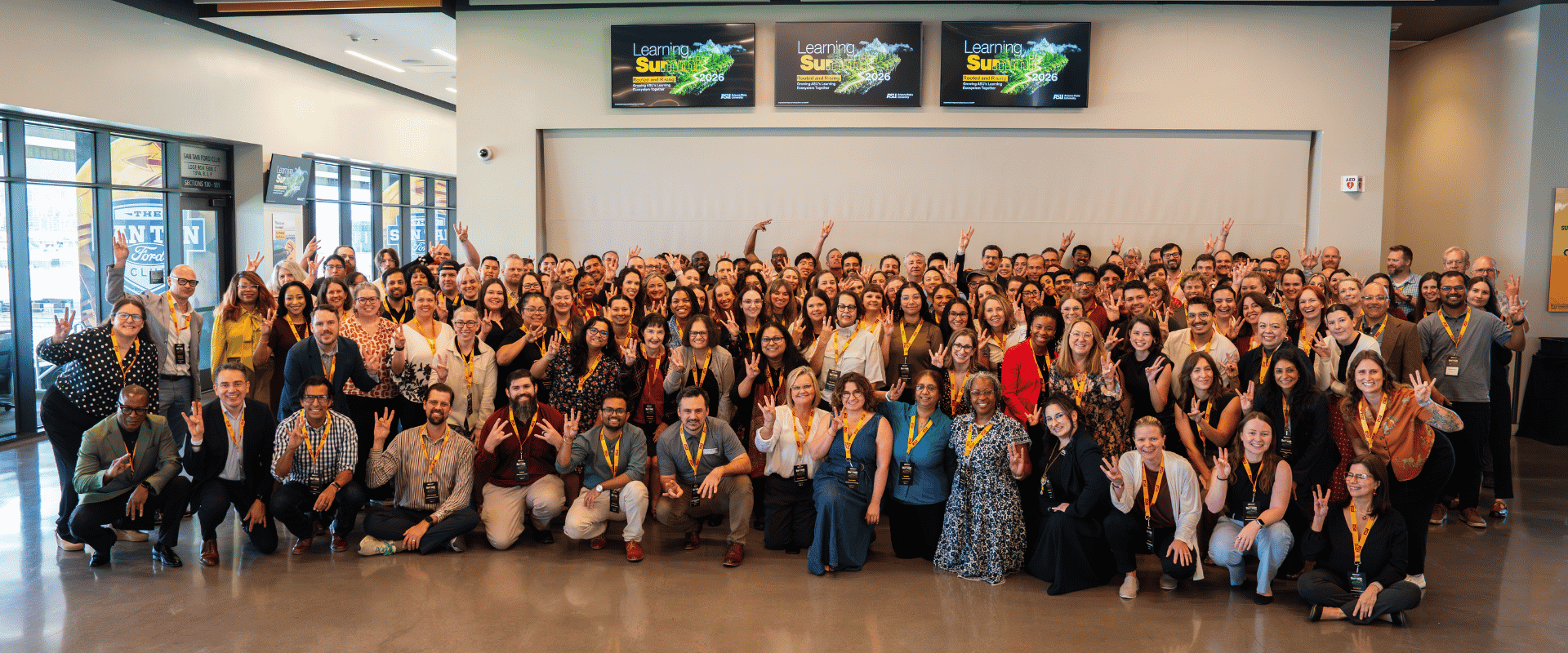
This week, faculty and staff from across Arizona State University’s schools and colleges gathered for the second annual ASU Learning Summit. Hosted by ASU’s Learning Enterprise, the event convened colleagues to strategize on expanding opportunities for learners. ASU’s schools and colleges extend their expertise into courses and credentials people can access at different stages of life. High school students earn college credit. Adults earn admission to an ASU degree by succeeding in college courses first. Professionals add skills and certificates long after graduation.
This year’s theme, “Rooted and Rising: Growing ASU’s learning ecosystem together,” reflected the university’s efforts to build upon an already solid foundation. In a changing world of education, speakers and participants explored how collaboration across disciplines, units and areas of expertise can help ASU serve as a leading institution in the future of learning.
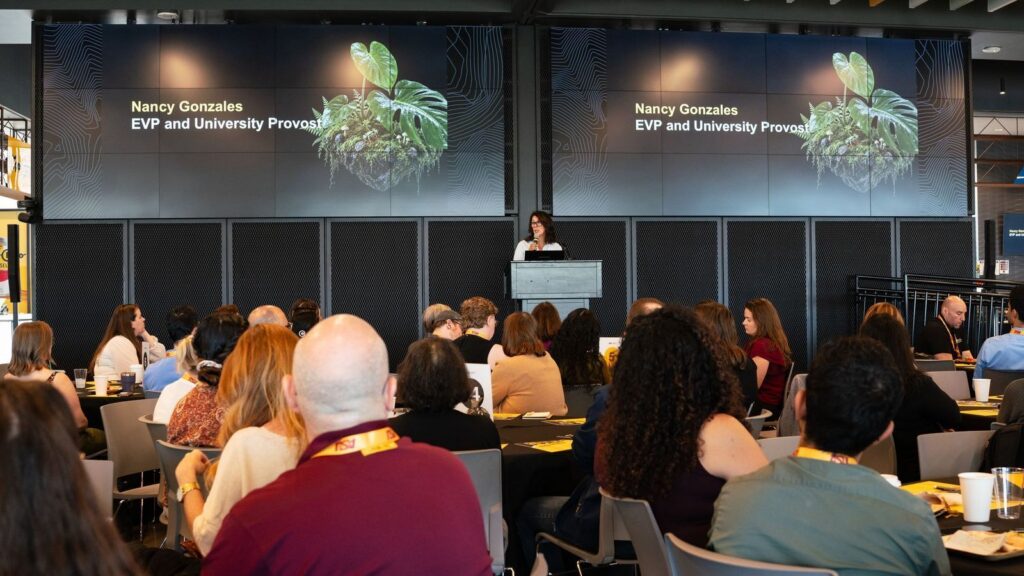
The morning featured perspectives from President Michael Crow, University Provost Nancy Gonzales and Marco Serrato, vice president of ASU’s Learning Enterprise, on the topic of advancing new approaches to learning across ASU.
Crow challenged attendees to think broadly about ASU’s role in making its knowledge accessible beyond traditional degree pathways. He described the university as a vast “knowledge core” and called on those working across ASU’s learning ecosystem to become “master translators,” connecting the expertise of faculty and researchers with people who can benefit from it at every stage of life.
But the summit was about more than any one program or speaker. Together, participants explored new ways to strengthen ASU’s interconnected learning ecosystem, one that becomes stronger when expertise and opportunities are shared.
Key takeaways from the 2026 Learning Summit
1. ASU’s learning ecosystem is taking root
Five years ago, ASU’s Learning Enterprise set out to help the university serve learners beyond traditional degree pathways, with the goal of extending learning opportunities throughout people’s lives.
At the summit, Marco Serrato reflected on the progress made since then:
- In 2026, hundreds of thousands of learners participated in ASU learning opportunities beyond traditional degree pathways, accounting for more than 700,000 enrollments across programs and offerings.
- More than 10,000 learners have been admitted to ASU through Earned Admission.
These numbers represent the growth of an ecosystem that now includes Universal Learner Courses, Accelerate ASU, Earned Admission, ASU CareerCatalyst, ASU for Life, Conservation Futures Academy, Ask an Expert, employer partnerships and more.
Gonzales credited that work with changing what the university can do.
“Learning Enterprise has extended ASU’s ability to serve learners at every stage,” Gonzales said.
2. The next phase of learning crosses disciplines
The challenges facing learners, employers and communities today are multidisciplinary. With that in mind, Gonzales encouraged participants to draw on expertise from across ASU when considering their learning paths.
The next phase of the work calls for “what ASU does best,” Gonzales said, “what ASU was designed to do, which is to bring together expertise from across the university.”
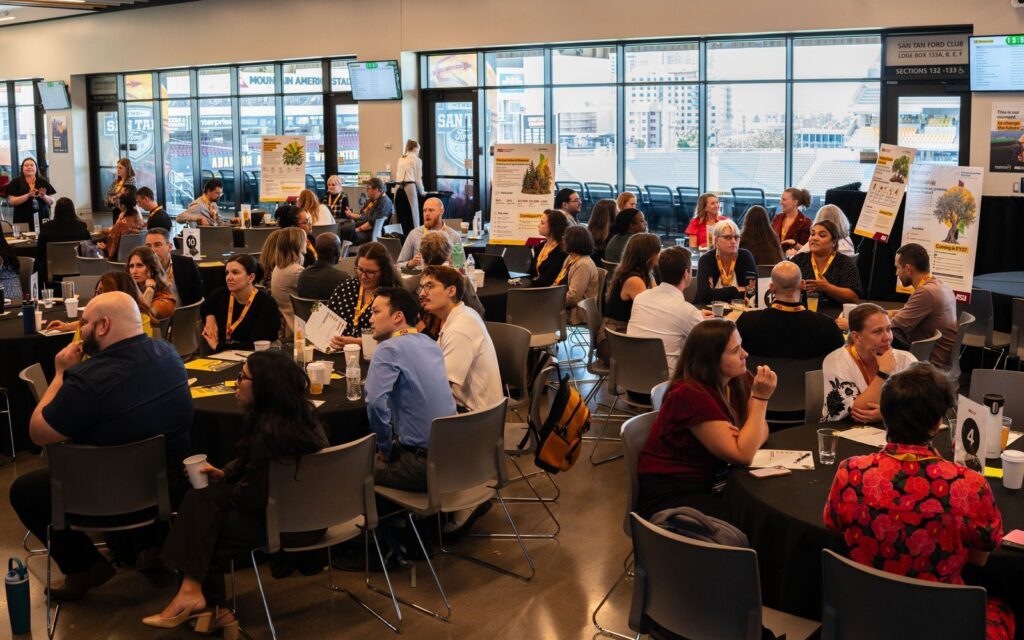
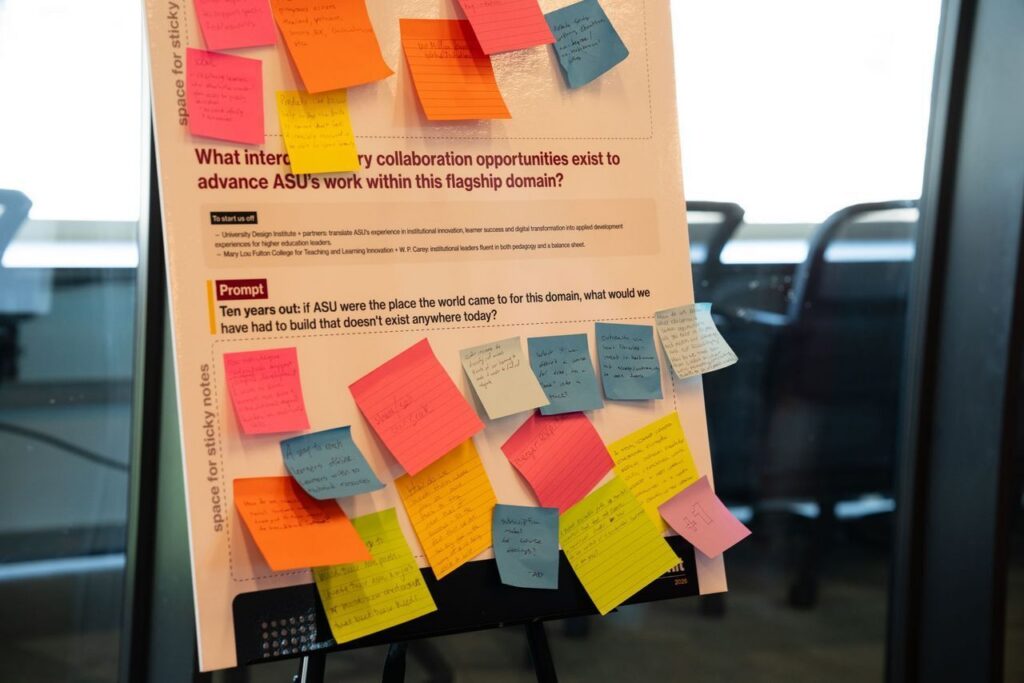
That thinking helped shape a major working session at the summit focused on 10 emerging flagship academic domains. The areas span topics including health futures, advanced manufacturing, the future of work and AI, planetary health, the creative economy and energy futures.
Participants explored how ASU can bring together faculty and expertise from multiple disciplines around these areas, creating learning opportunities that draw on the breadth of knowledge available across the university.
3. ASU is lowering the shields around university knowledge
To President Crow, the university’s vast body of knowledge is at the heart of its ability to serve more learners.
Universities create, store, synthesize and transfer knowledge, he told attendees. “We’ve decided to take all the force fields, all the shields that surround most universities, and lower them so that people can find a way to have access to what it is that we produce here,” Crow said.
With the technological advancements and new learning models available today, universities now have the opportunity to connect individuals with university expertise at a much greater scale.
Crow challenged those working across ASU’s learning ecosystem to become well-versed in turning the expertise generated by faculty and researchers into learning experiences that can reach people wherever they are.
“Find a way to reach people with a living, breathing, quote unquote, library of knowledge,” Crow said. He described who that library is for: a woman trying to take her home-based business in a new direction, someone struggling with a parent’s mental health and “the kid of today, the adult of today, the person of today, who needs something.”
ASU Universal Learner Courses put that idea into practice by opening first- and second-year ASU courses to learners without traditional admission barriers. The same courses can also create a performance-based pathway into an ASU degree through Earned Admission.
4. Learning pathways can begin with where people want to go
Traditionally, universities presented learners with a catalog of courses, asking them to determine which option best fits their needs.
ASU is exploring ways to reverse that process.
Serrato highlighted ASU for Life, an AI-enabled platform designed to connect career goals, skills and learning over time. Learners can explore where they want to go, identify skills they may need and find learning opportunities that can help them move forward.
The approach reflects a larger shift toward connected learning pathways that respond to individual goals, prior knowledge and changing career needs.
AI-enabled tools are helping ASU make these pathways increasingly personalized. During conversations at the summit, participants discussed how learners may ultimately need different combinations of courses, short learning experiences, credentials or degrees to reach similar goals.
Instead of expecting every learner to follow the same route, ASU is working toward an ecosystem where people can more easily identify the next step that makes sense for them.
5. The definition of a learning environment is expanding
The summit’s setting offered a glimpse of what learning beyond a traditional classroom can look like.
Activities began with the Learning Enterprise team on Tuesday at ASU’x MIX Center in Mesa, which combines academic programs and research with immersive technology, industry partnerships and community programming. The center includes resources ranging from extended reality and game-based learning labs to immersive production spaces and community workshops.
Stephanie Tomlin of ASU MIX described the center as a potential hub for delivering new kinds of learning experiences to the broader community.
The setting reinforced a question Serrato posed during the summit: What’s possible if ASU connects not only its courses and digital platforms, but also its physical spaces and other university assets?
Online learning will remain central to expanding access, Serrato said, but learners’ needs extend beyond digital experiences. ASU’s campuses, centers and locations around the world are creating opportunities to combine online learning with in-person, hybrid and immersive experiences.
The opportunity now is to connect those assets — faculty expertise, technology, physical spaces and partnerships — into pathways that can adapt as learners’ lives and goals change.