[2025 Year in Review] College in high school, reimagined: ASU dual enrollment model grows globally
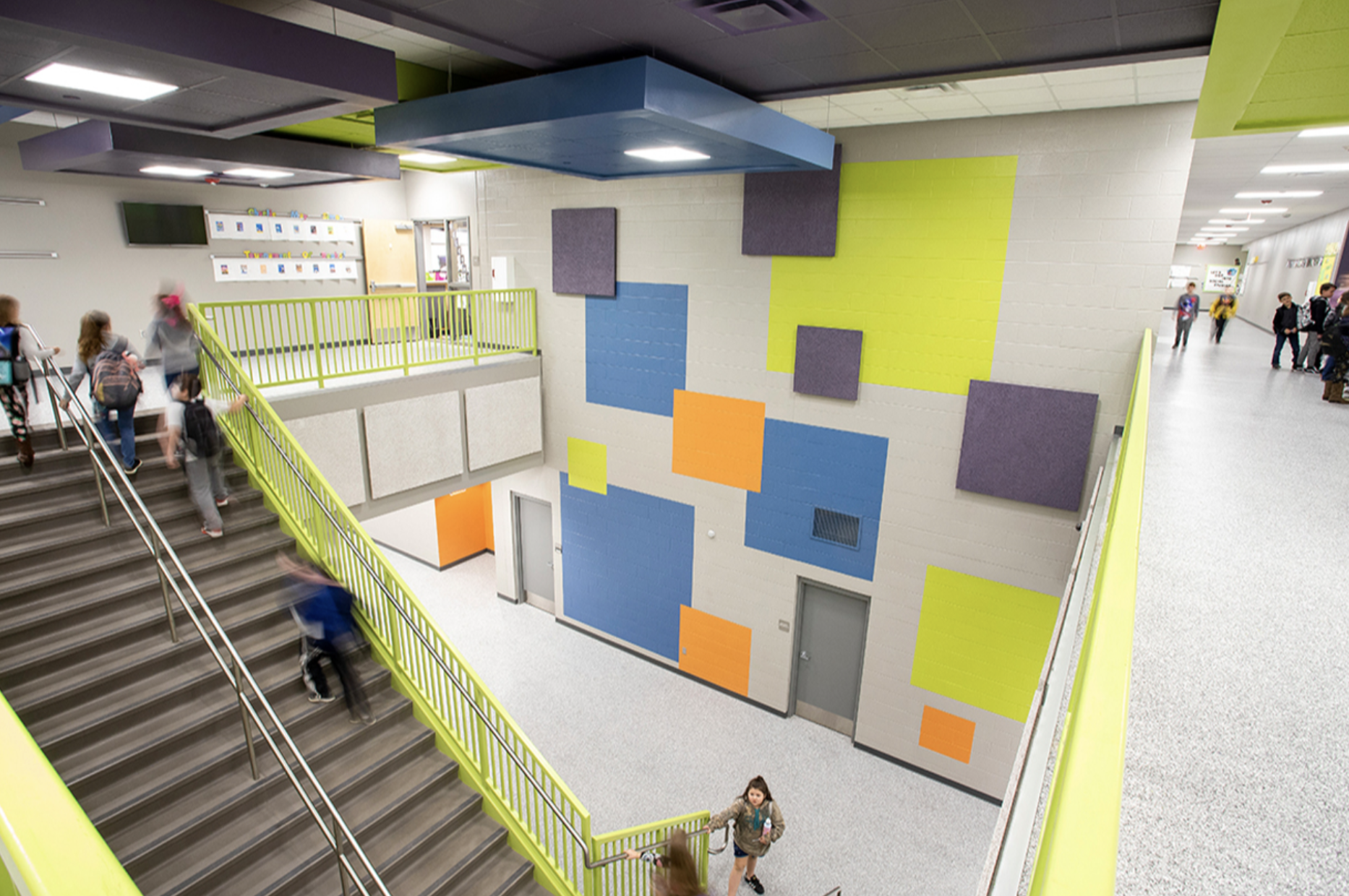
Accelerate ASU boosts college attendance and graduation rates for students across more than 550 partner schools
This article is part of our 2025 Year-in-Review series, a retrospective on the inspiring stories of Arizona State University’s Learning Enterprise, focused on advancing learning across all stages of life.
By the numbers:
- 550+ school partners since the program began
- 23,000+ high school students engaged
- ~1,000 high school students admitted to ASU with credit towards a degree already earned
- 40+ countries with participating schools
As the world began to lock down in 2020, two very different school systems looked to ASU to keep their students learning.
Kamehameha Schools Hawaiʻi Campus, part of a system of private schools in Hawaii, partnered with ASU Prep Global, ASU’s virtual K-12 school, to create an online learning platform that would meet the cultural needs of Hawaiian students.
Across the Pacific, the Archdiocese of Los Angeles, a system serving students across 50 Catholic high schools, was searching for a dual enrollment program that could scale. They found it in their partnership with Accelerate ASU, one of the largest university-led dual enrollment programs in the country.
Both school systems have found ASU’s dual enrollment programming so effective that their partnerships have endured and grown even as the pandemic has eased, making them part of a robust network of more than 550 schools partnering with the program in 2025.
Flexible, affordable learning for all learners
With over 23,000 students served, Accelerate ASU is designed to adapt to high schools of all sizes and missions. It offers college courses taught by ASU faculty, with no GPA requirements to enroll. Students only pay for course credit if they are satisfied with their grade — making it a low-risk, high-reward option.
With 72% of jobs projected to require some form of postsecondary credential by 2031, helping students earn credit early is becoming both a strategy and a necessity for schools across the globe.
In Hawaii, Kamehameha Schools’ partnership with Accelerate ASU has grown into a program called “Ke Ala I Ka Palapala Laepua” or “Pathway to Bachelor’s,” which enables students to balance rigorous academics with their Hawaiian cultural identity. Since its inception, participation has grown by 300%, with nearly 100 of the school’s 585 students now taking part.
Dr. Isaac Vigilla, Dean of Studies at Kamehameha Schools, appreciates the flexible, personalized nature of ASU’s program, saying, “Our principal takes the approach of ‘many paths for many.’ We can’t have a cookie-cutter approach to education anymore.”
For the Archdiocese of Los Angeles (ADLA), which serves many first-generation and low-income students, ASU’s dual-enrollment model is breaking traditional barriers to college.
“I would say close to 100% of students feel more prepared for college after taking ASU courses,” said Edgar Salmingo, Jr., Director of Early College and Online Learning for ADLA. “Many start out thinking, ‘This is too hard. I don’t know if I can handle it.’ But by the end, they’re saying, ‘Oh, I can do this.’”
With funding from the Conrad N. Hilton Foundation and the Dan Murphy Foundation, ADLA has also been able to remove financial barriers for students while integrating ASU Universal Learner Courses into school schedules.
“We’re proving that students — especially first-gen students — are more than capable of college-level work,” Salmingo said. “They just need the opportunity. Accelerate ASU is helping us provide that opportunity, and the results speak for themselves.”
Balancing athletics, work and academics
In May 2025, Shania Rivera was juggling senior year coursework with two part-time jobs, multiple sports practices and student council leadership roles.
Rivera attended Fountain Hills High School, a public school in Arizona, which offers dual-enrollment through Accelerate ASU.
Despite her packed schedule, Rivera was able to earn 19 college credits through ASU’s flexible, self-paced Universal Learner Courses, including Intro to Anatomy and Physiology, Intro to Psychology, English 101 and several math classes.
“Many students who previously didn’t see themselves as ‘college material’ are now finding success in these courses, building confidence and seriously considering higher education,” says Brent Olsen, an English teacher at Fountain Hills. “Others who may have thought college was financially out of reach are seeing new possibilities, thanks to the program’s affordability.
“The majority of our students are earning A’s and B’s, entering college with strong GPAs, and, most importantly, gaining the confidence that they can handle college-level work.”
Learning outcomes go global
Dual enrollment programs are proving to be a powerful tool in increasing college readiness, with 81% of dual enrollment students enrolling in college within one year of high school graduation compared to ~70% of students overall.
These results have led to interest in dual-enrollment across the globe. In 2023, ASU launched a collaboration with International Baccalaureate, allowing students enrolled in the IB Career-related Programme to take ASU courses in subjects such as business, sustainability and health.
At ICS Addis in Ethiopia, students are using the program to reduce college costs while exploring subjects that match their interests.
“The biggest draw was students’ ability to dive into areas of specific interest while earning college credit,” said Deanna Milne, curriculum coordinator at ICS Addis. “Whether it’s for financial savings, confidence or career exploration — for most, it’s the chance to do all three.”
Coming together, eyeing the future
Over two days in June 2025, Accelerate ASU hosted its first Accelerate ASU Partner Conference, bringing over 100 high school leaders, educators and counselors to Tempe to exchange working models and sharpen their vision for the future of dual-enrollment.
Dr. Isaac Vigilla, dean of studies of Kamehameha Schools in Hawaiʻi, emphasized the power of shared learning. “We’re often running pathways in silos, but now there’s a network of educators in this space,” he said. “The biggest takeaway for us is to continue collaborating. We’re taking this back to our stakeholders, instructors, parents and registrars to build out stronger, more responsive models”.
The flexibility of ASU’s dual enrollment model, both for schools and students, stood out among conference attendees.
“600 pathways for 600 kids is really what resonates in my head,” said Justin Blanchard, principal of Gentry High School in Arkansas. “That’s a mindset that we have. It’s great to hear that as a shared vision here.
During the closing session, Scott Weatherford, executive director of Universal Pathways, shared a new offering: an “Introduction to Global Affairs” course developed with the Council on Foreign Relations.
Weatherford added that the team is also working to build an AI and Design course, a four-course conservation certificate, and a Google Cybersecurity Credential.
“This is about building something that reaches more students and actually supports their success,” said Weatherford. “It’s about helping them earn credit, build momentum and feel a real sense of belonging in higher education.”