ASU Learning Summit 2025 charts a shared vision for a learner-centered future
With voices from across the university, the Learning Summit set the tone for a new chapter of collaboration, alignment and impact
What does it really mean to put learners first?
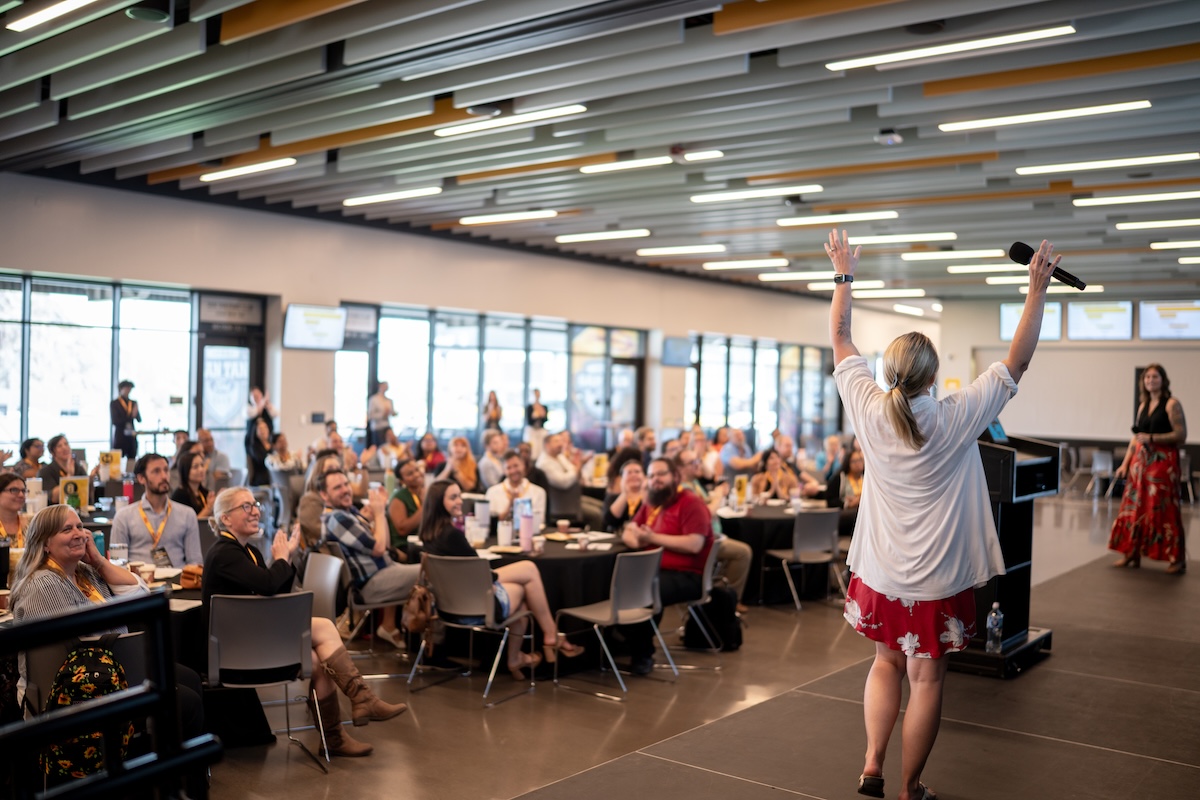
This week, ASU staff, faculty and liaisons from schools and colleges across the university gathered for the inaugural Arizona State University Learning Summit to explore answers. The two-day event, hosted by ASU’s Learning Enterprise, created space to reconnect on purpose, reflect on evolving learner needs and deepen alignment across the university.
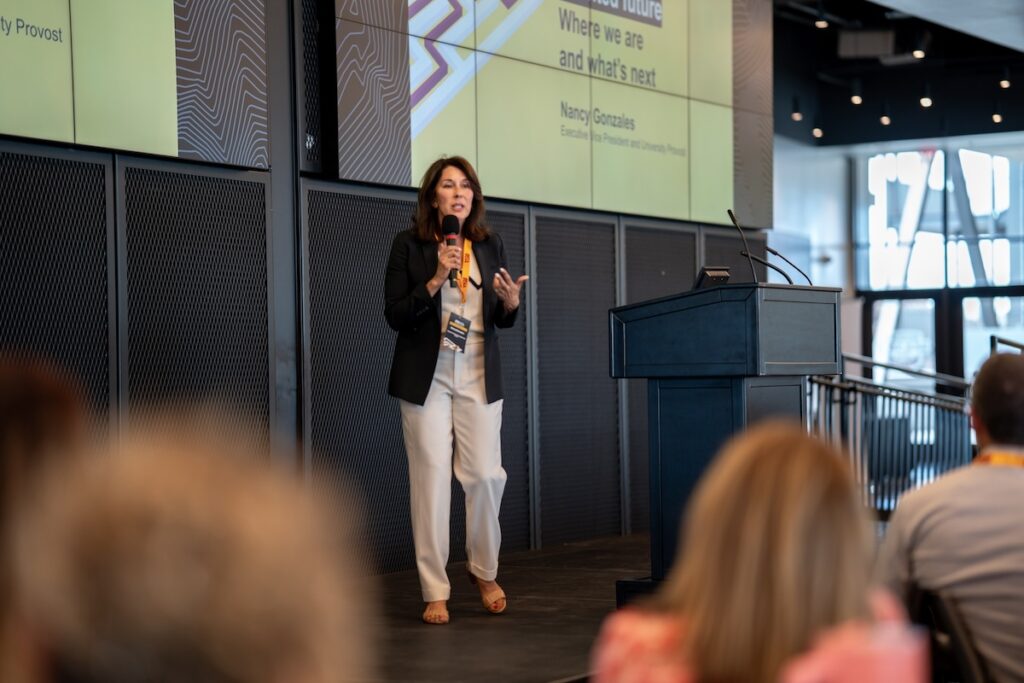
The gathering began the evening before with a reception at ASU’s Art Museum — an environment designed to foster exactly the kind of creative, cross-disciplinary collaboration and future-focused thinking that shaped the summit itself. At the start of Summit the next day, University Provost Nancy Gonzales welcomed the group and emphasized the importance of working together to expand access and support learner success at every stage of life.
“Rather than retreat, we need to move faster. We need to really make sure that we’re partnering with the right people that will advance in all the ways that we need to,” said Provost Gonzales. “To achieve those big ambitions, we need to be integrated and focused. And that really is what the next phase is for all of our work together.”
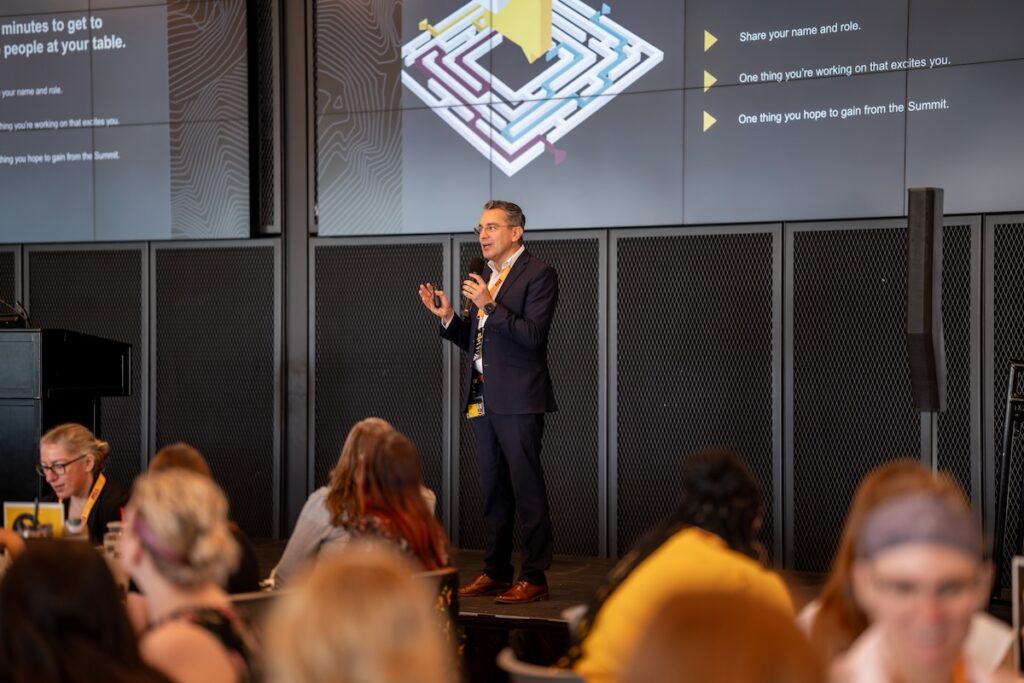
“We’re not just designing programs. We’re connecting the dots,” shared Marco Serrato, vice president of ASU’s Learning Enterprise. “We ask: ‘What is this learning offering for?’ Not just what it’s about — but how it will help someone move forward, grow, or gain opportunity. That’s how we live ASU’s charter.”
The theme, “Map through the Maze,” grounded the Summit. It asked participants to focus not only on the why of ASU’s learner-oriented mission — expanding access and opportunity — but also the what and how. Sessions highlighted ASU’s key learner priorities and gave participants space to identify their own next steps to take back into colleges and teams.
Key takeaways from the 2025 Learning Summit
Here are five takeaways that emerged from the conversation:
Across both days, participants heard from learners, faculty, deans and partners, all working to design and deliver learning experiences that reflect the real needs of real people. It wasn’t just a presentation of plans — it was a shared moment of momentum.
1. ASU is aligning around a shared learner-centered mission
In the opening keynote, “ASU’s Learner-Oriented Future: Where We Are and What’s Next,” Provost Gonzales framed the university’s approach as inclusive of all learners, across all life stages. Serrato followed with “Our Learner-Oriented Strategy,” highlighting how ASU is removing barriers through initiatives including Earned Admission, Accelerate ASU and CareerCatalyst.
Throughout the day, presenters reinforced that serving more learners—including traditional degree seekers, adult learners and career changers — isn’t a tradeoff. It’s central to ASU’s charter and long-term impact.
2. Our priorities are focused and actionable.
Three strategic priorities anchored this year’s expanded vision, shared throughout the Summit:
- Expanding outreach and degree integration through Universal Pathways
- Advancing a consistent, ASU-wide credentialing framework
- Piloting new learning models aligned to workforce and life transitions through Emerging Learning Solutions
In “From Complex to Compass,” Nicole Kallman, director of enterprise collaborations, and Kelly Schuster, senior director of marketing and corporate partnerships, introduced the new ASU-wide credentialing framework that establishes consistent terms and clear stackability into degrees.
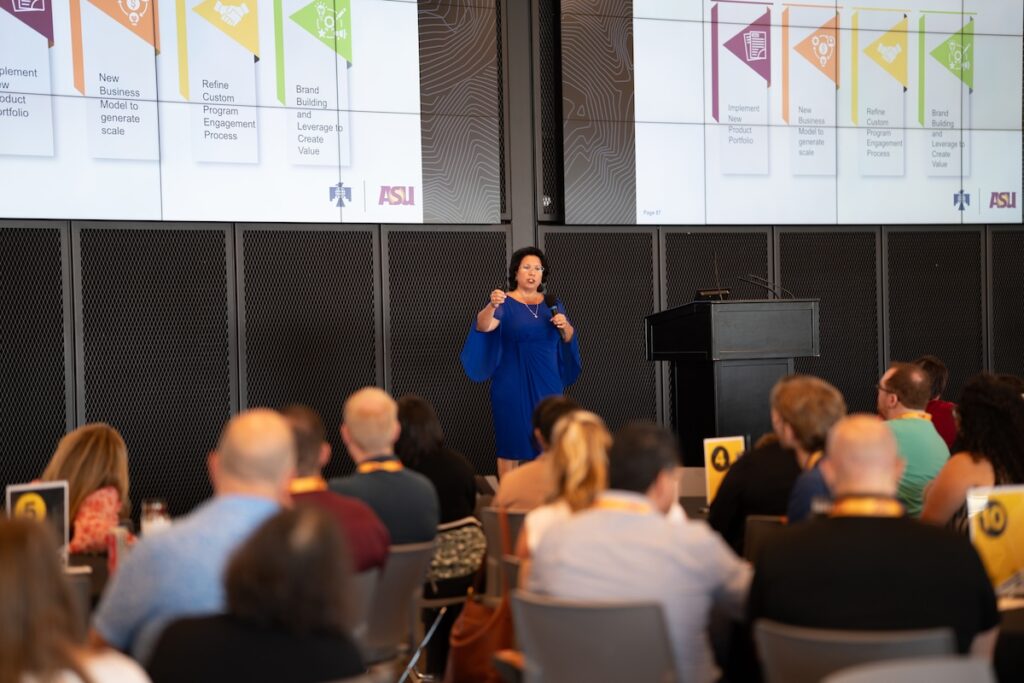
They walked through the naming and structure, highlighted the project management pilot as a proof point, and then traced pathways that show how microcredentials and certificates roll up into degrees and how those signals translate for learners and employers. Participants left with a shared vocabulary and a practical view of how the framework will be implemented across colleges.
3. Collaboration is essential to meet learner needs.
In the session, “Forging global learners for the future of work,” Charla Griffy-Brown, dean of Thunderbird School of Global Management, emphasized the role of academic units in co-designing responsive programs. She pointed to Thunderbird’s work in tailoring programs for working professionals as an example of how colleges can meet learners where they are.
“The future of work is not a far-off concept. It’s right here,” said Griffy-Brown. “And it requires us to co-design with learners in real time, not after the fact. That’s how we stay relevant, and that’s how we serve.”
Later, in “Bridge Builders: Advancing ASU’s Learner-Oriented Work,” facilitated by Patrick Rossol-Allison, associate vice president of the Learning Enterprise, a panel of LE liaisons from different ASU Schools and Colleges shared how they act as connectors across colleges.
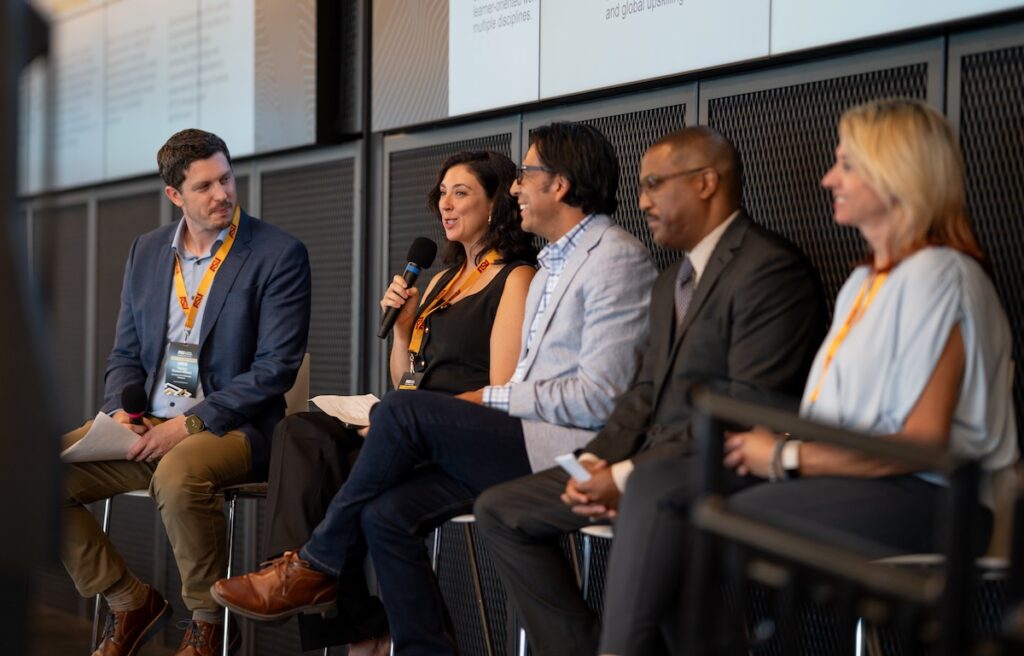
- Gina Wilt from Mary Lou Fulton Teachers College described how she works with faculty and LE teams to create professional development opportunities for K–12 educators.
- Octavio Heredia from the Fulton Schools of Engineering highlighted how partnerships in high-demand fields like microelectronics and AI are expanding learner access globally.
- Malcolm Holmes from the Cronkite School of Journalism and Mass Communication spoke about building workforce programs that respond to the rapidly changing media landscape.
- Gloria Espinoza-Minihan from The College of Liberal Arts and Sciences reflected on strategies for building trust across units and aligning diverse disciplines toward shared goals. Together, the panel underscored that collaboration is not just about coordination, but about co-creating solutions that scale.
The faculty panel “Learning Is a Journey: Developing Effective and Impactful Learning Offerings,” facilitated by Scott Weatherford, executive director of Universal Pathways brought forward perspectives on how faculty are adapting their teaching and research to a more diverse learner base.

- Prof. Sean Williams from the College of Integrative Sciences and Arts described how designing structured learner pathways can both widen access and respond to workforce needs.
- Prof. Terry Shoemaker from School of Historical, Philosophical and Religious Studies spoke about his experience with Universal Learner Courses and how they provide inclusive entry points for students who might not follow traditional timelines.
- Prof. Karen Mossberger, emeritus professor in Watts College of Public Service and Community Solutions, reflected on her long-term work with Universal Learner Courses and how they’ve served as tools for equity in higher education.
- Eileen Eisen-Cohen, also from Watts College, highlighted how feedback from nontraditional learners has reshaped her approach in the classroom, pushing her to design assignments and supports that match real-world needs.
The panel’s shared message was clear: serving learners across different stages of life and circumstances enriches teaching itself, requiring faculty to rethink not just content, but delivery, assessment and expectations.
5. Technology and design are expanding what’s possible
In “Exploring the Maze: Learning Through AI Exploration,” (led by Serrato and Faith Dalzell, LE assistant director of global initiatives) teams walked through early-stage tools that use AI to help learners navigate options more effectively.
Participants underscored AI as an essential tool in the next step in building personalized, career-aligned pathways at scale. The session underscored a key principle: technology should adapt to learners, not the other way around.
Together, these takeaways add up to more than a checklist. They reflect a university already deep into the work — refining, expanding and connecting efforts to better serve learners at every stage.
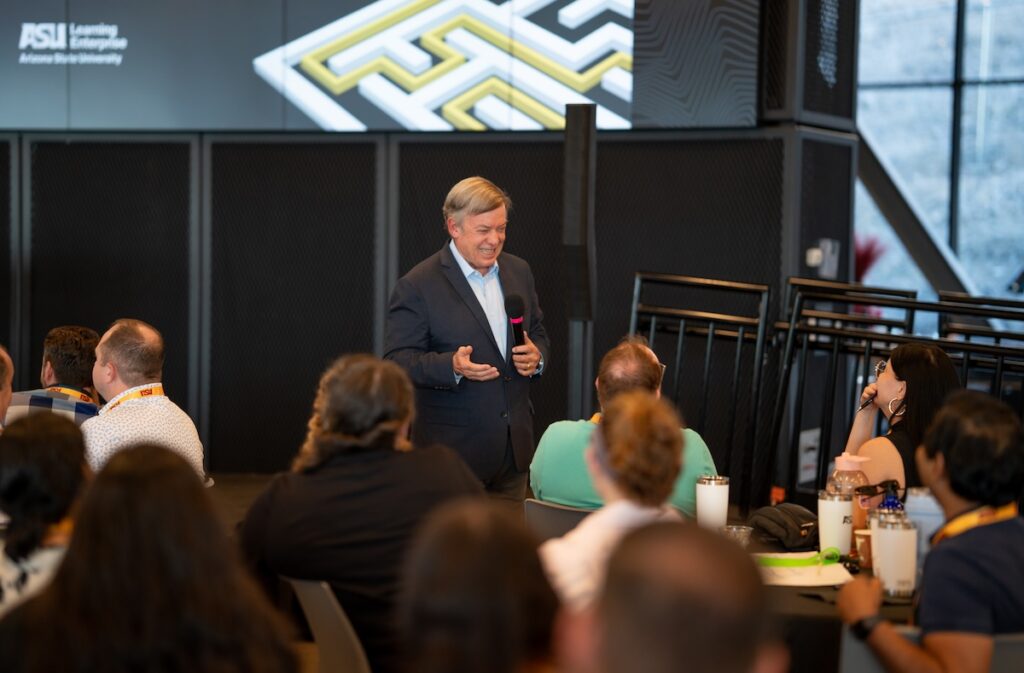
The Summit closed with remarks from President Michael Crow, who spoke about ASU’s responsibility to lead through innovation and access. In the closing keynote session, “The New American University and ASU’s Learner-Oriented Future,” he challenged attendees to think of inclusion and excellence not as competing goals, but as mutually reinforcing.
The charge ahead is clear, and it belongs to all of us. As Serrato said, “We’re not just scaling programs. We’re scaling purpose and opportunity to effectively serve learners at every stage of life.”